
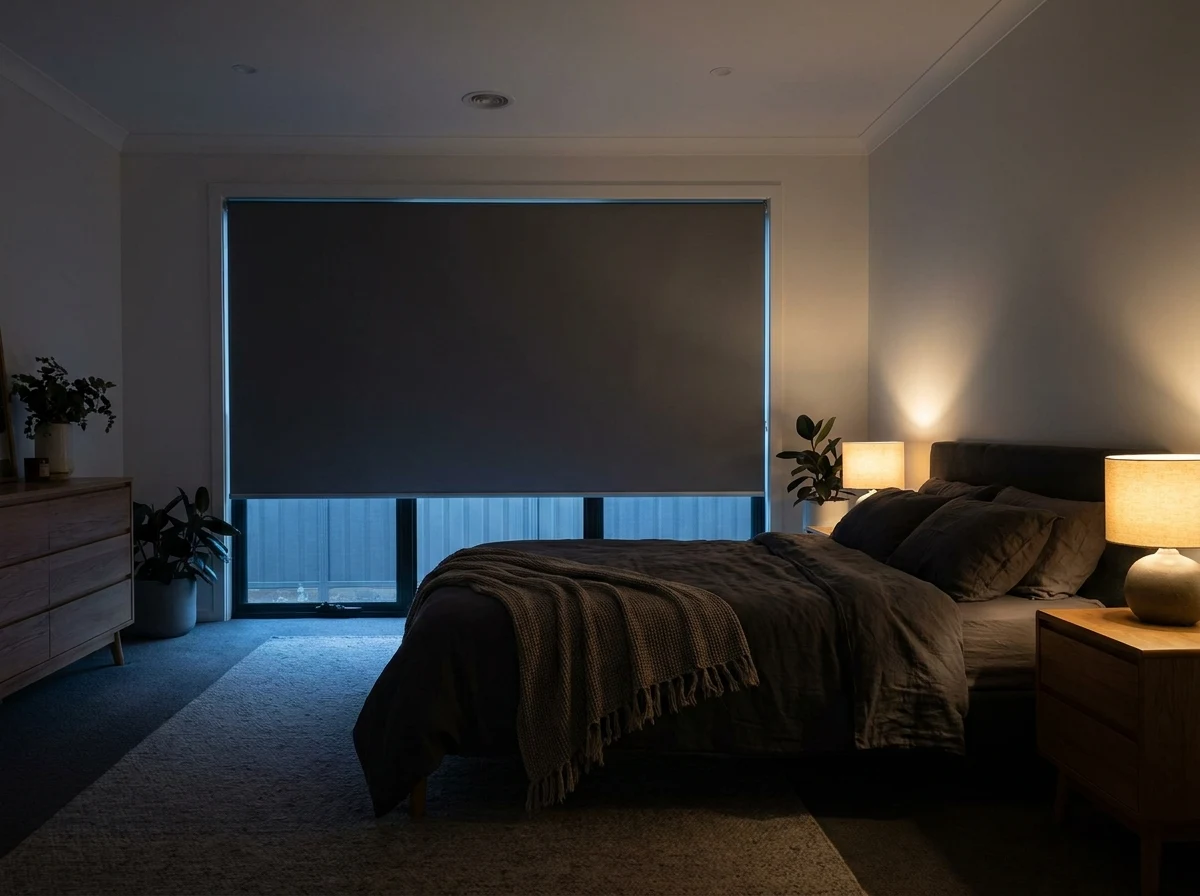
Blockout roller blinds
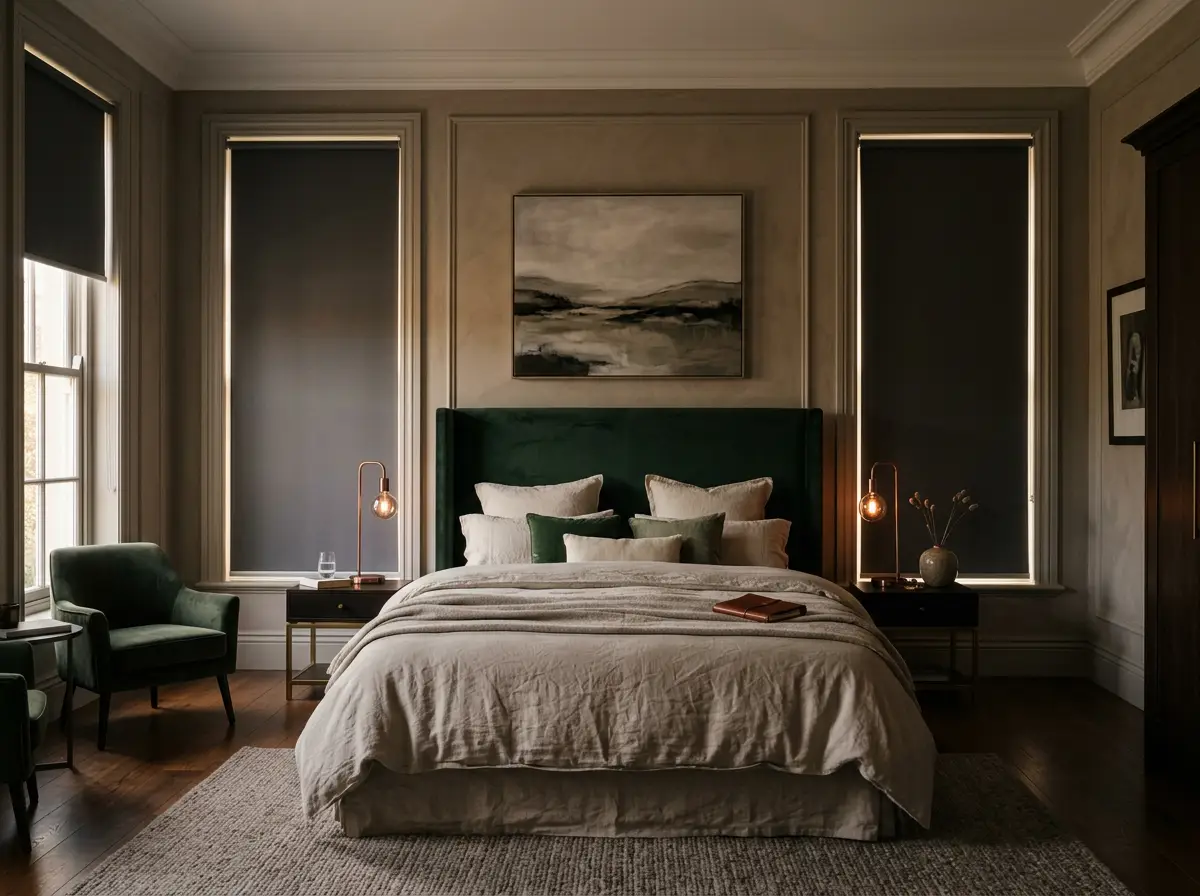
One smooth flat sheet on a tube — no folds, no slats. True darkness for bedrooms, media rooms and guest suites.
Explore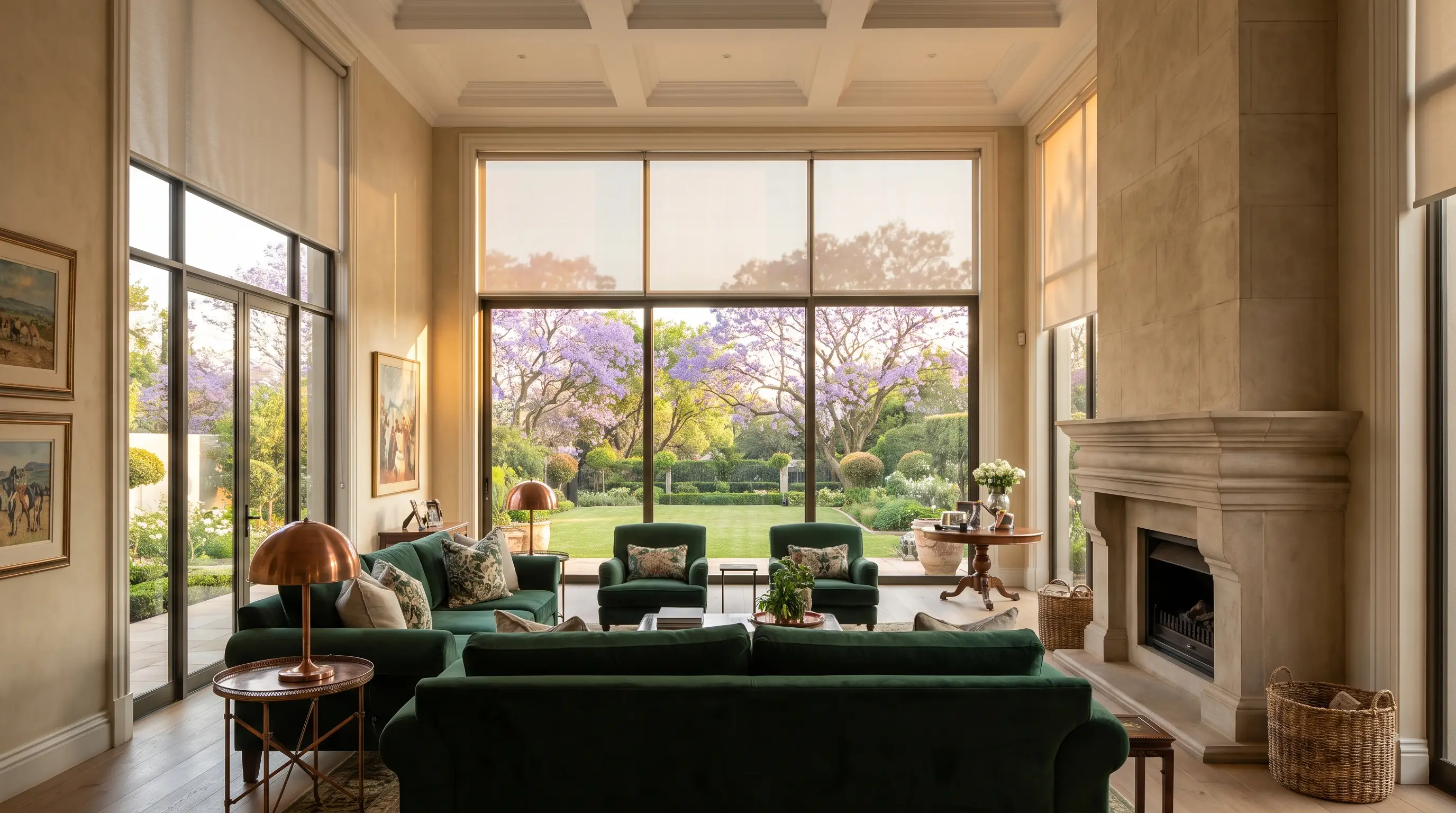
Sandhurst · Johannesburg
Made-to-measure blinds, roller shutters, awnings and automated shading — measured, specified and fitted for Sandhurst homes and the suburbs around it.
Made for this suburb
Sandhurst homes are built around light. Deep north-facing living wings, double-volume glazing and floor-to-ceiling sliders make a June morning glorious — and turn a February afternoon into a problem you cannot furnish your way out of.
The specification that actually works here does two jobs at once. View-preserving sunscreen weaves on the living glass, so the lawn and the jacarandas stay where you can see them. True blockout where people sleep. And, on the elevations that take the worst of it, shading mounted outside the glass, because heat stopped at the window never becomes heat you have to cool.
Much of our work in this suburb is deliberately quiet: blind pockets planned with the builder before the ceilings close, motors hidden in a slot, one keypad running a whole wall of glass. And because most of Sandhurst was built between 1940 and 1970, anything fixed to the outside of an older house can raise a heritage question that a blind fitted inside the room simply does not — which we would far rather raise at the measure than after the order. The Papers explain where that line falls.
The range
Twelve product families, all made to order for your exact openings. If you are not sure which belongs on which window, that is precisely what the free measure is for.
One smooth flat sheet on a tube — no folds, no slats. True darkness for bedrooms, media rooms and guest suites.
Explore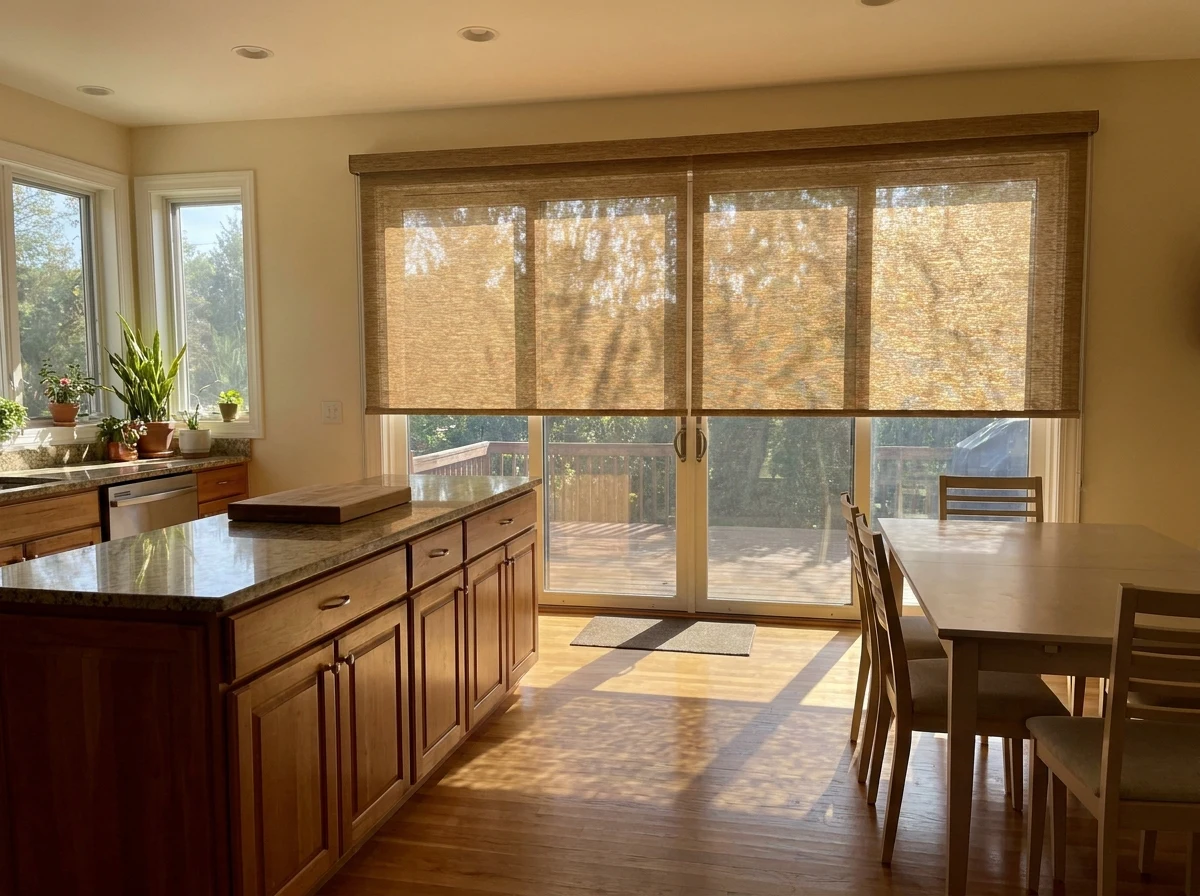
A 3–5% openness weave that cuts glare and UV while the garden stays visible through it. The standard answer for big Sandhurst glass.
Explore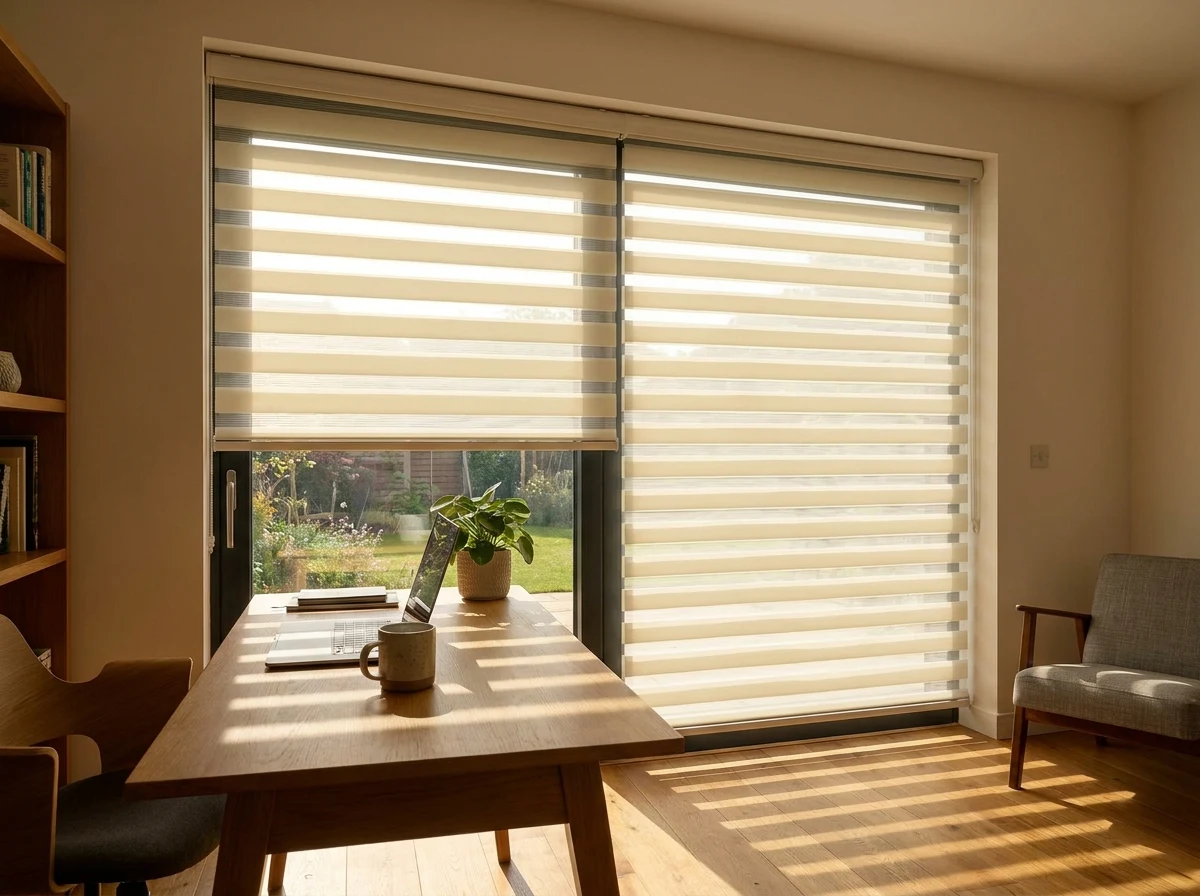
Alternating sheer and solid bands on a single roll: align them for a filtered view, offset them and the room dims right down.
Explore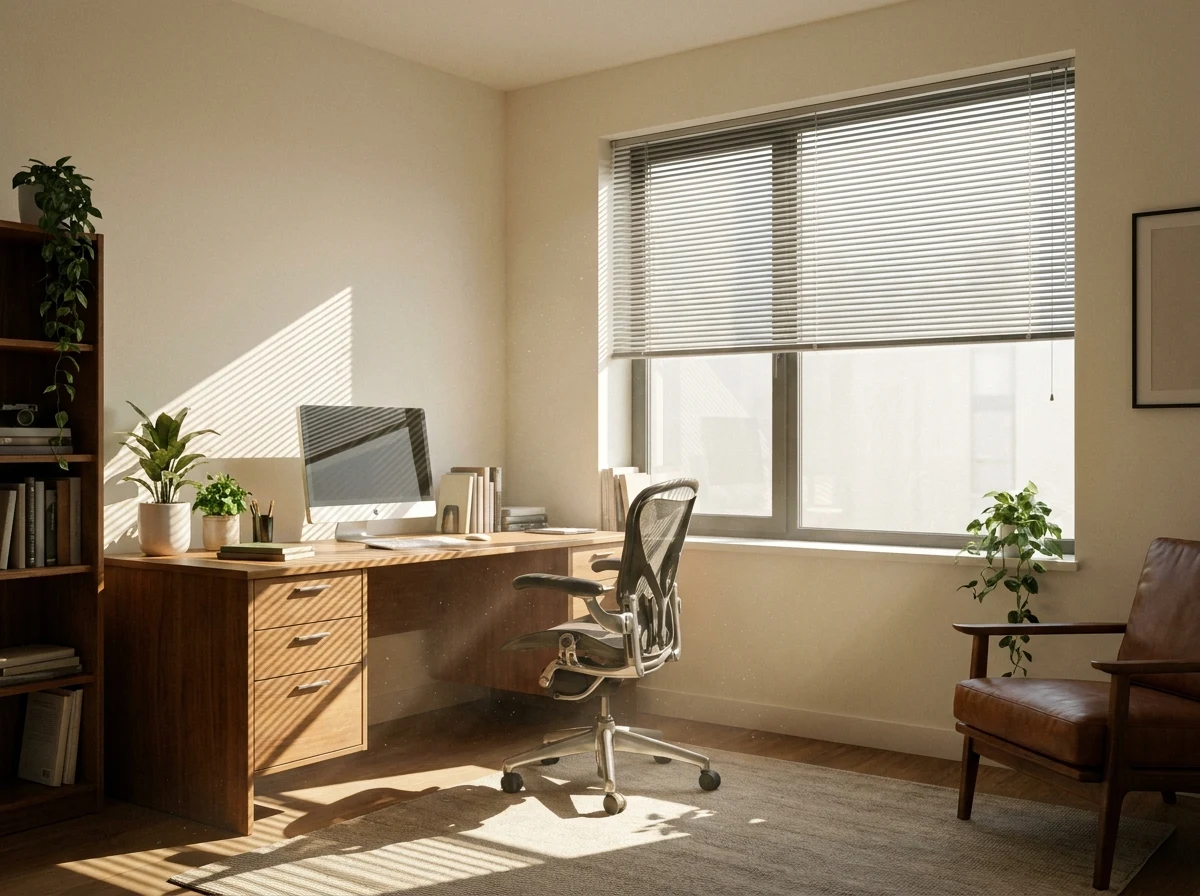
Horizontal slats you tilt, in aluminium or real timber — push a low afternoon sun onto the ceiling without closing the window off.
Explore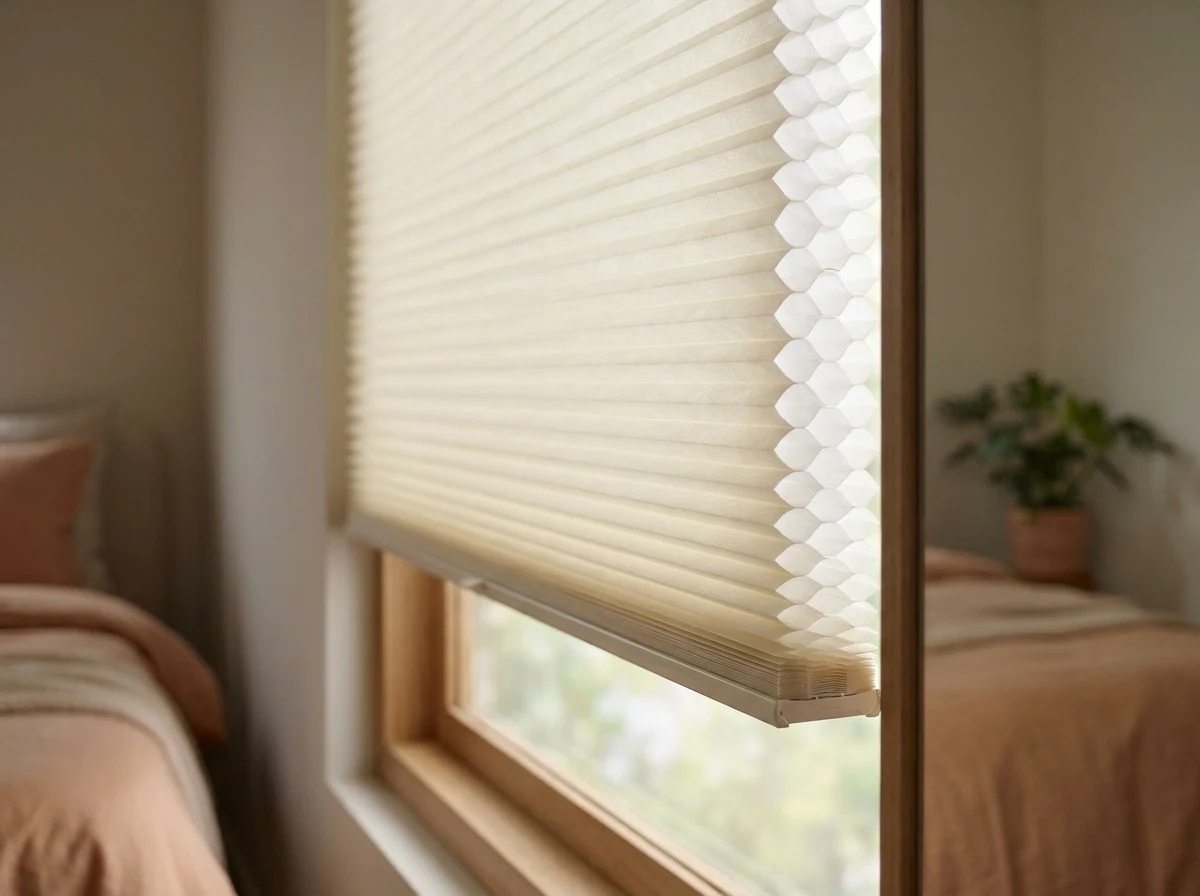
Honeycomb cells hold a layer of still air, so they insulate where a single fabric layer cannot. Gable and skylight glass, mainly.
Explore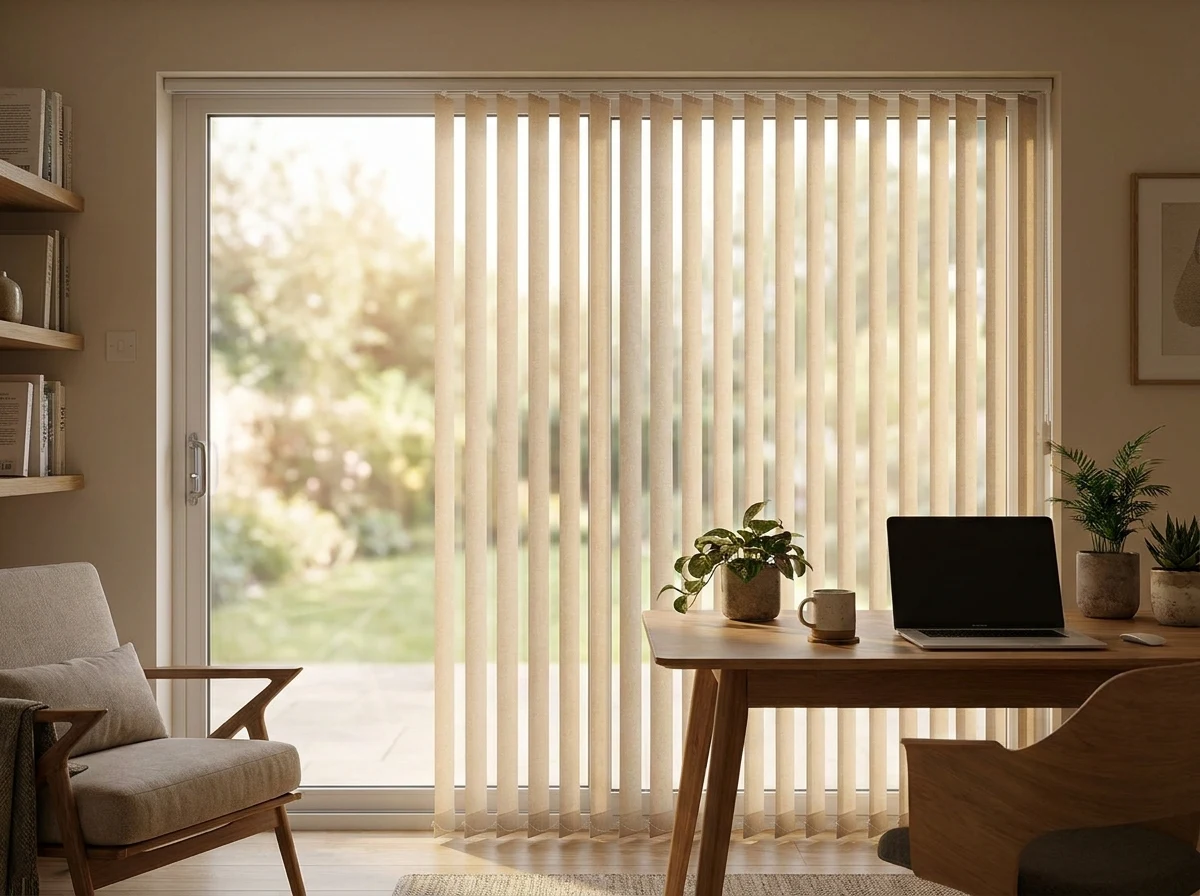
Rotating vanes or wide gliding panels — the practical line across a very wide slider, and a clean way to divide a glass-walled room.
Explore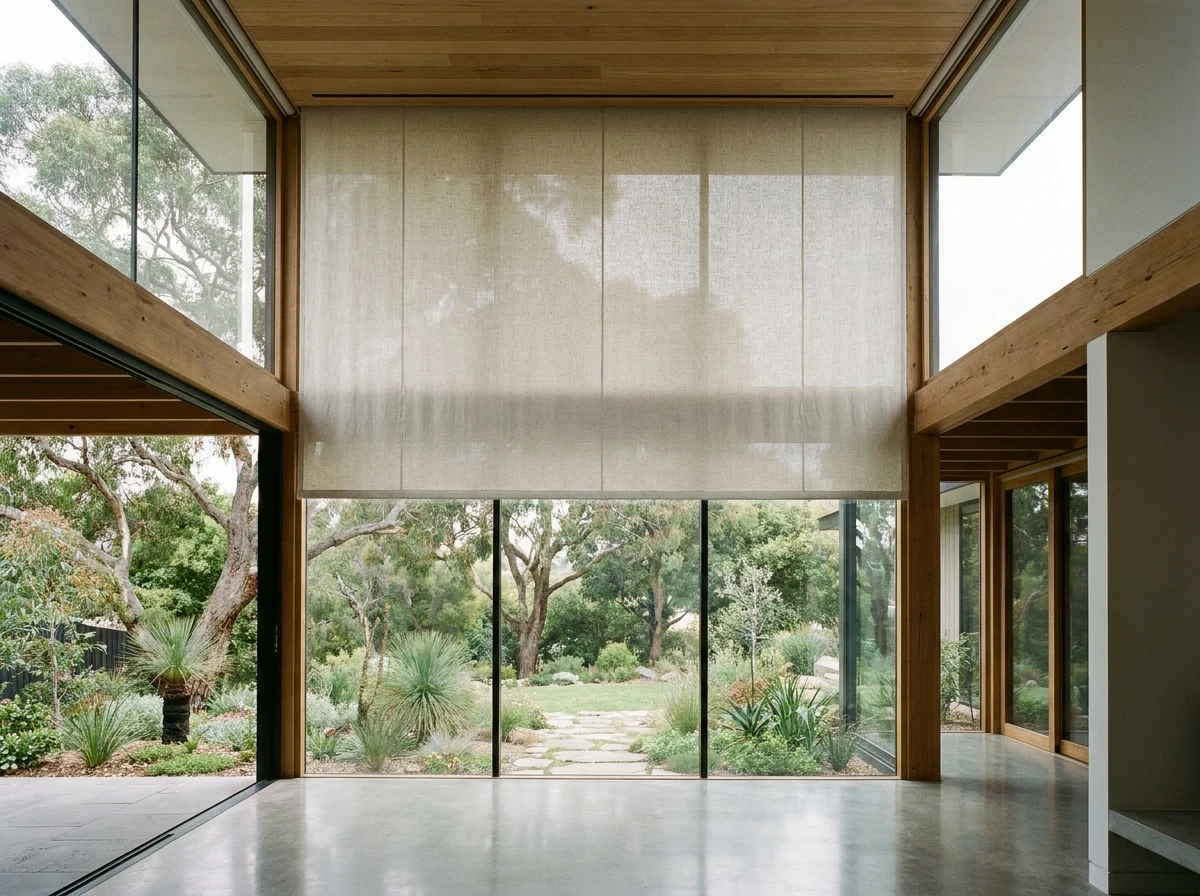
Fabric dropping from a slim ceiling slot, hardware invisible. Best planned at drawing stage; retrofit possible with slim cassettes.
Explore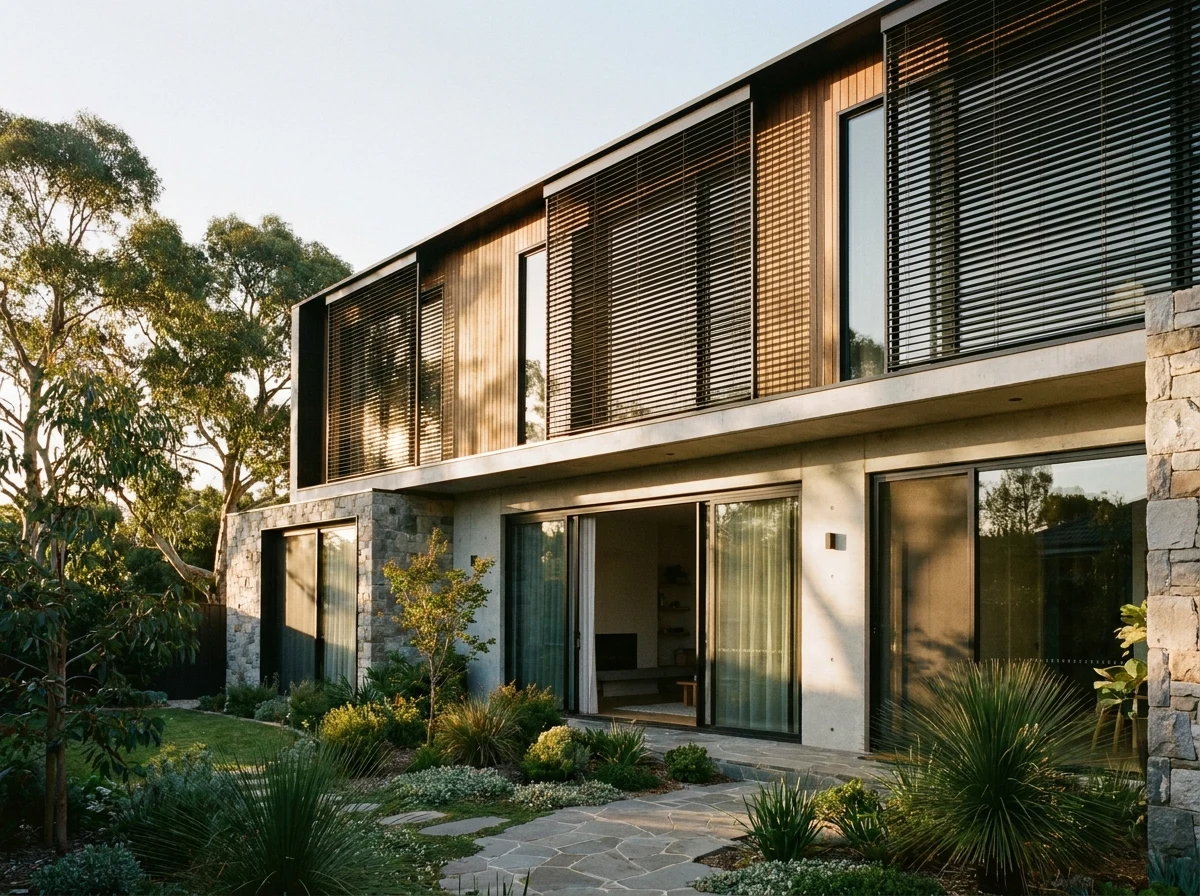
Wide aluminium slats mounted outside the glass. Heat is intercepted before it reaches the room — the strongest solar control we fit.
Explore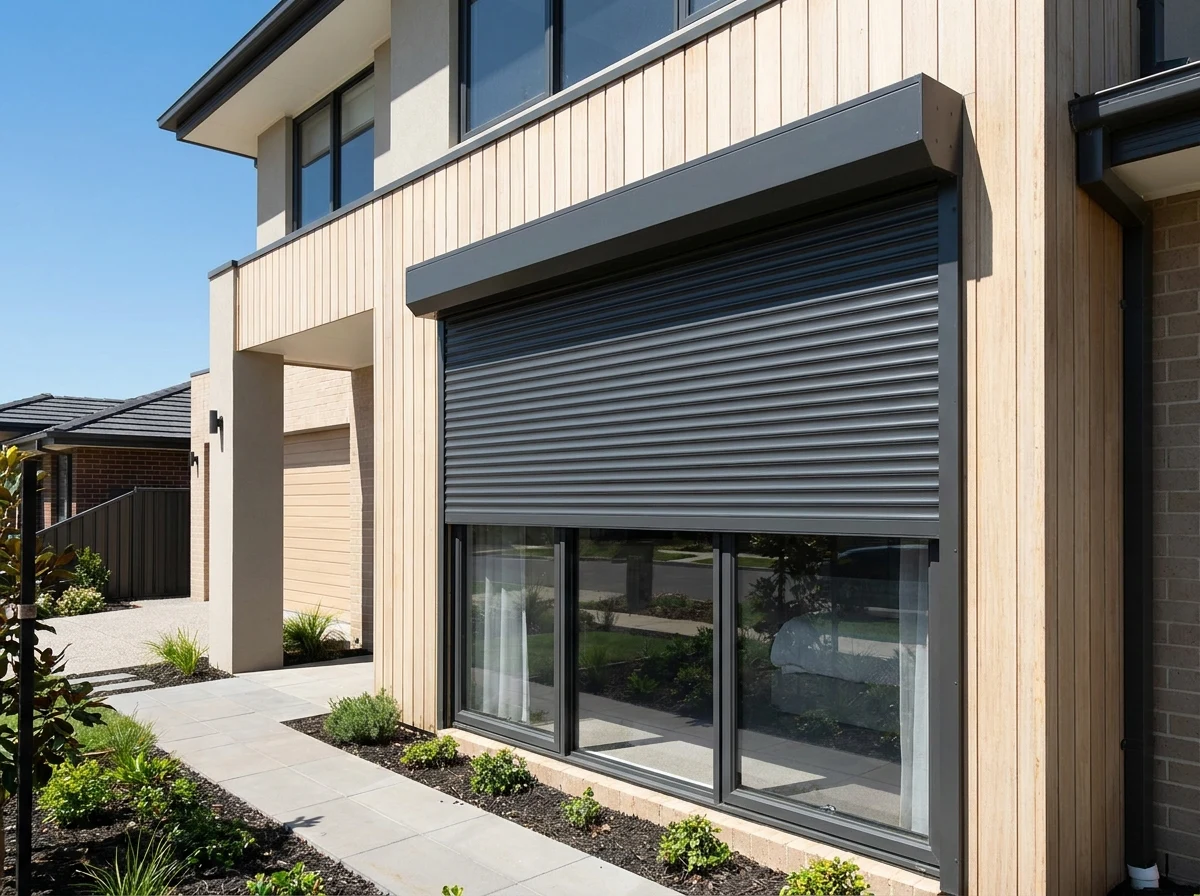
Rigid aluminium slats rolling down from a headbox outside the glass — sun, heat and glare stopped before they reach the room, with good daytime privacy.
These are shading roller shutters, not security-rated shutters — a different product entirely, available on request.
Explore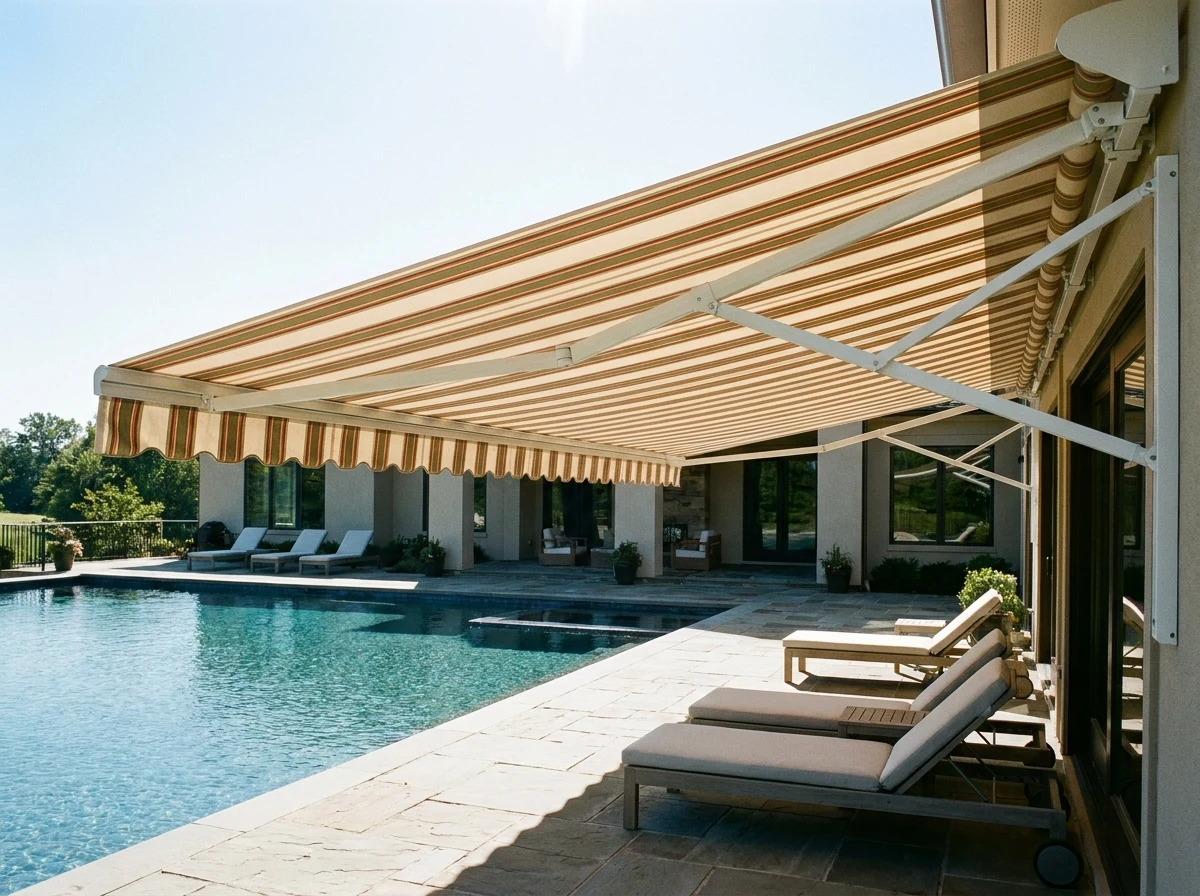
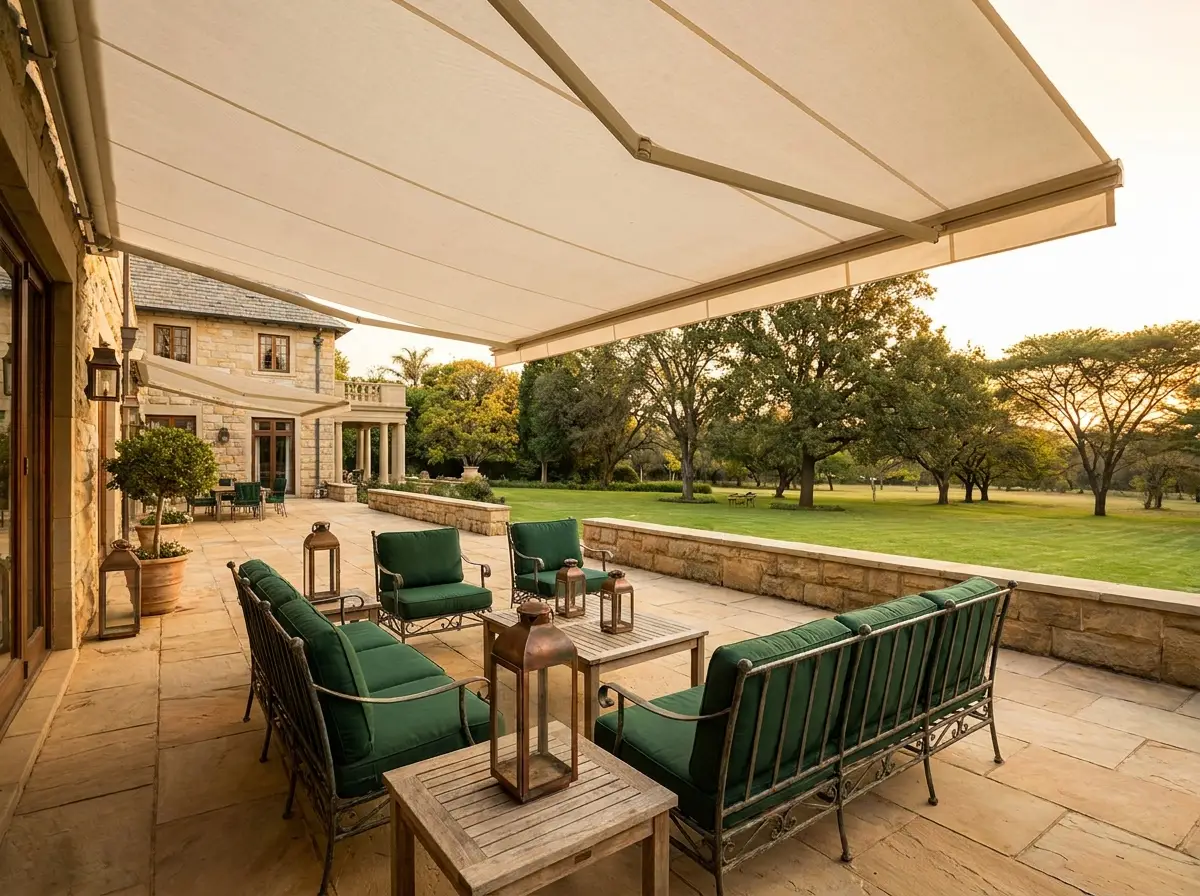
A fabric canopy on articulated arms, so nothing lands in the middle of the terrace. Wind sensor as standard on an exposed elevation.
Explore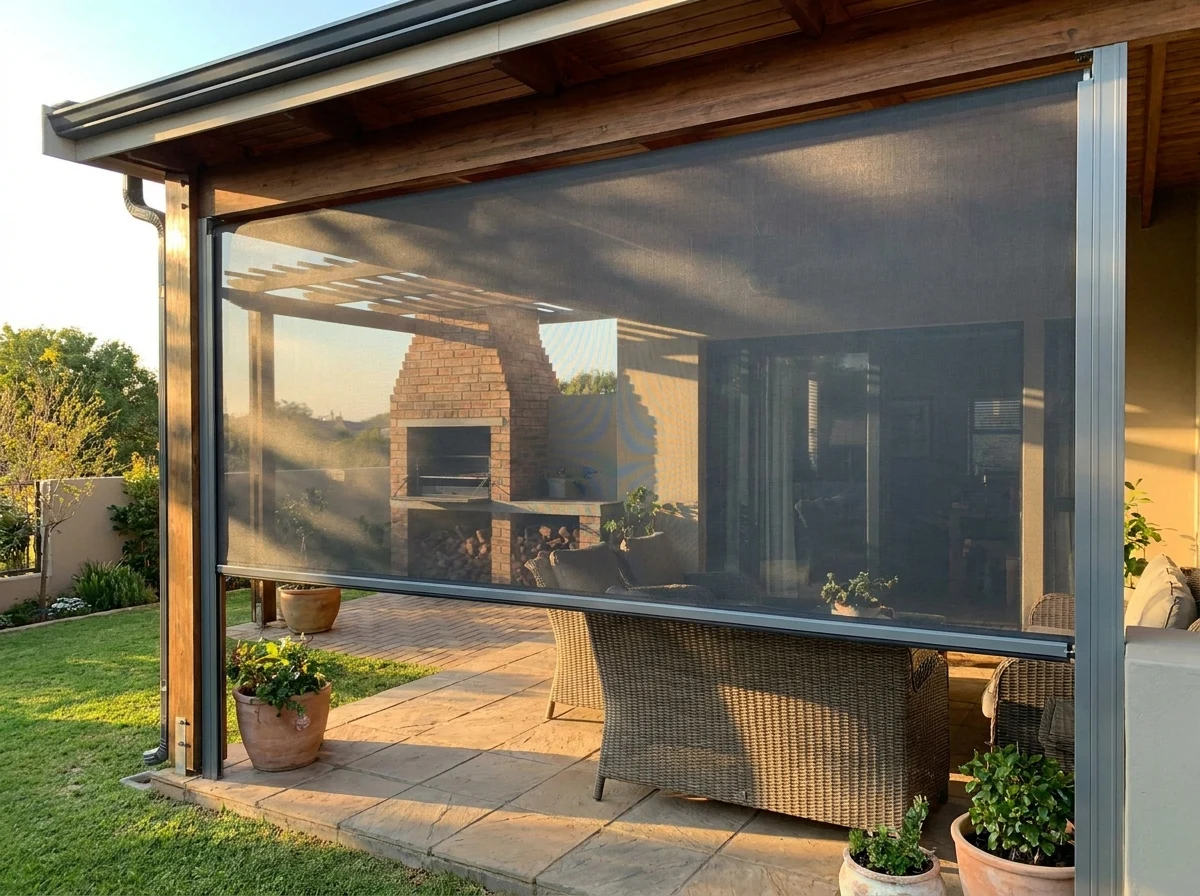
Tensioned mesh running in side channels, so the fabric cannot flap or blow out. Turns an open patio into a room you can still see out of.
Explore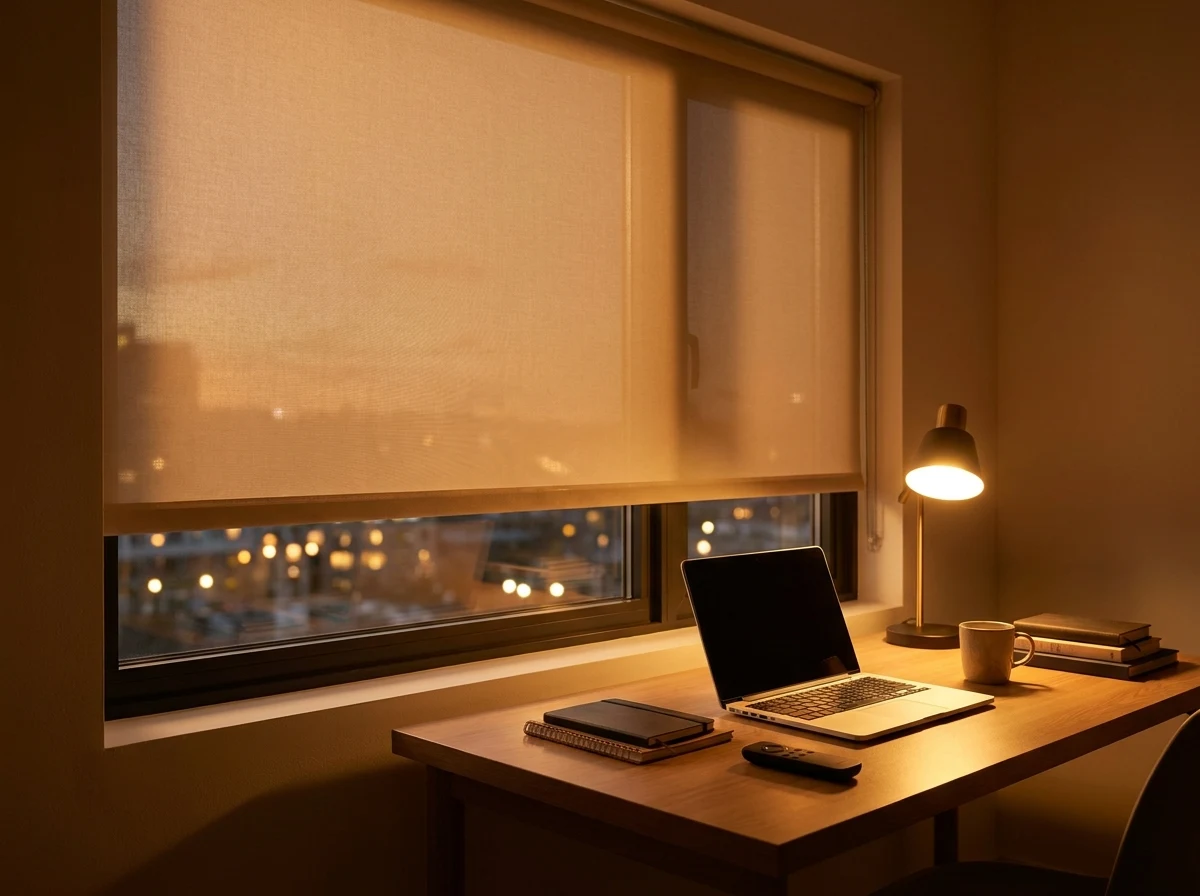
One keypad, remote or app across a whole wall of glass — on a schedule, or on a sensor that manages the west elevation for you.
Explore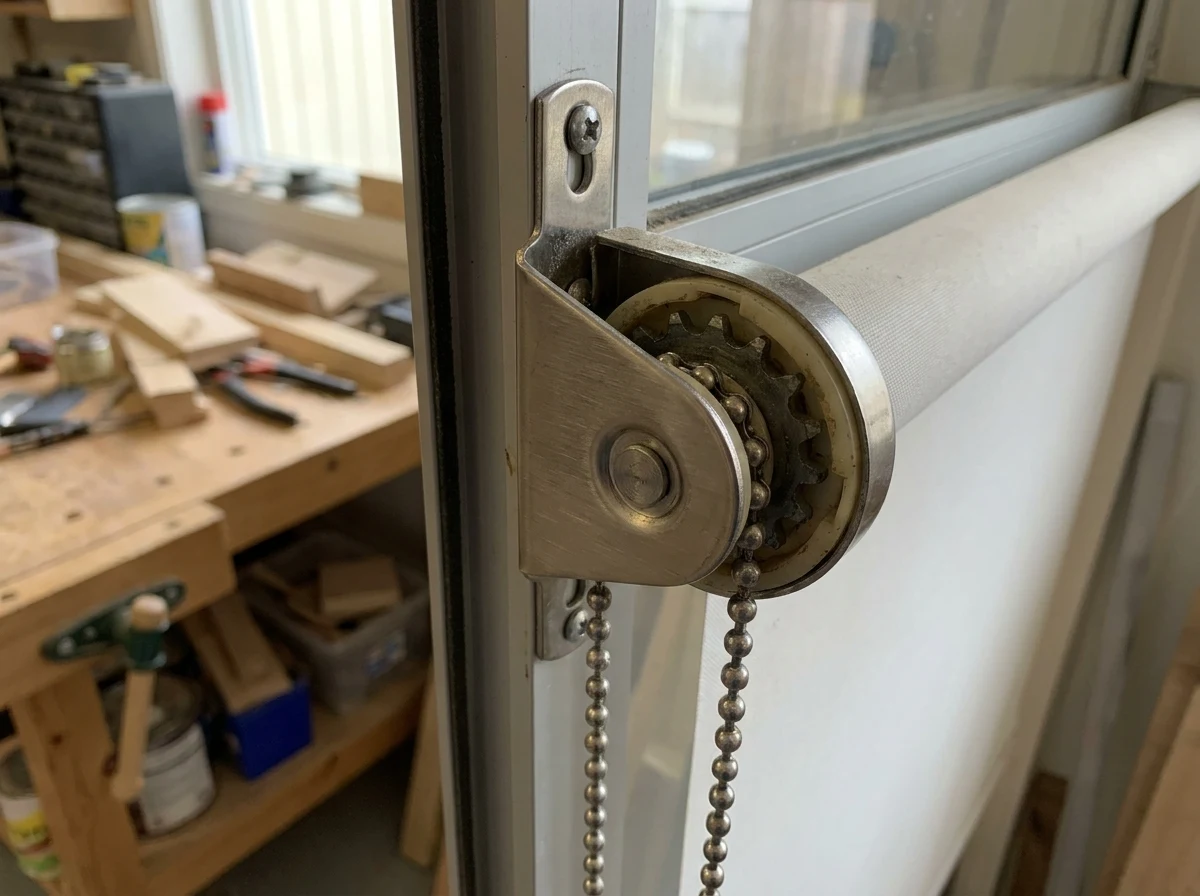
Snapped cords, a tired tilt mechanism, a blind knocked out of true after a repaint or a move — we restring, repair and re-fit what is already on your windows, whoever made it.
Book a repair What we fixRecent work
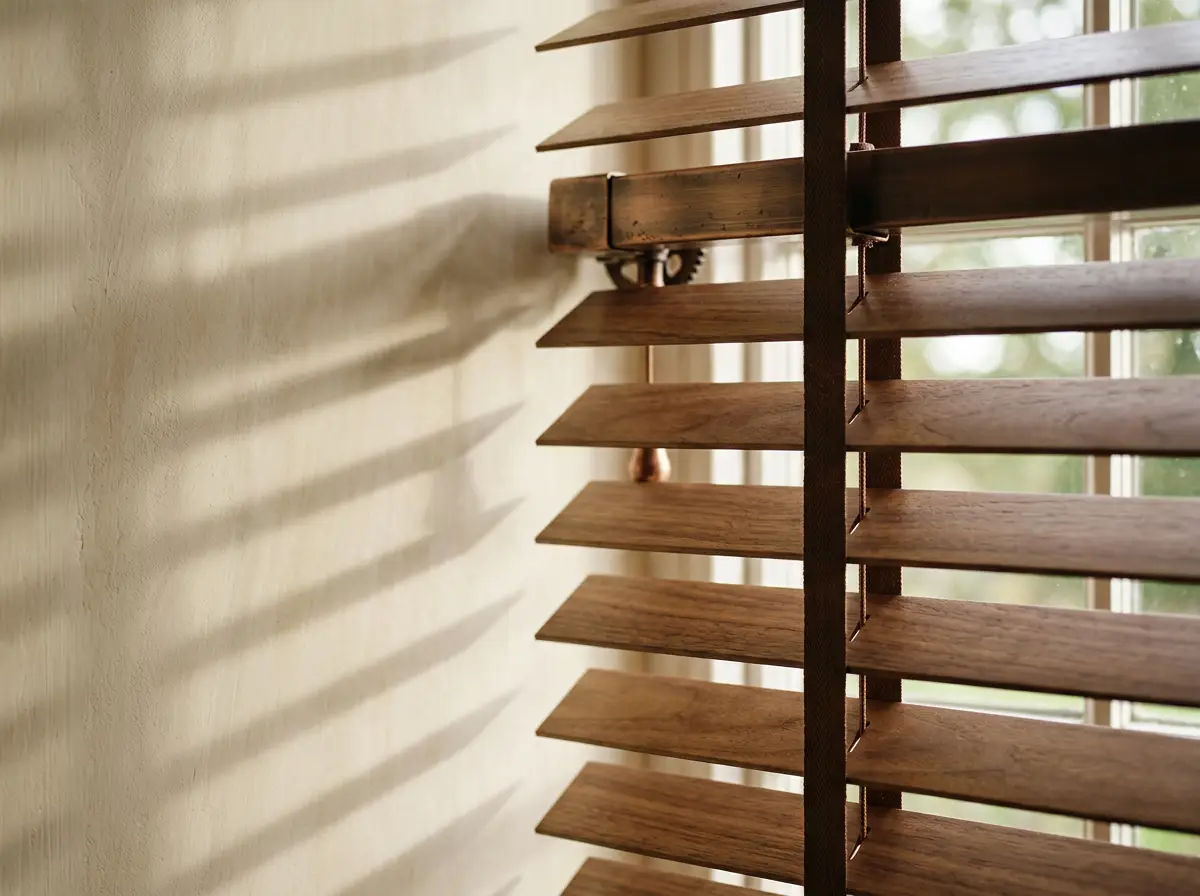
The three-o'clock line
The sun climbs, the light wedge walks across the floor toward the furniture, and the room gains heat it will hold until nine at night. Lower the right fabric at the right hour and the wedge stops at the sill.
Free to read
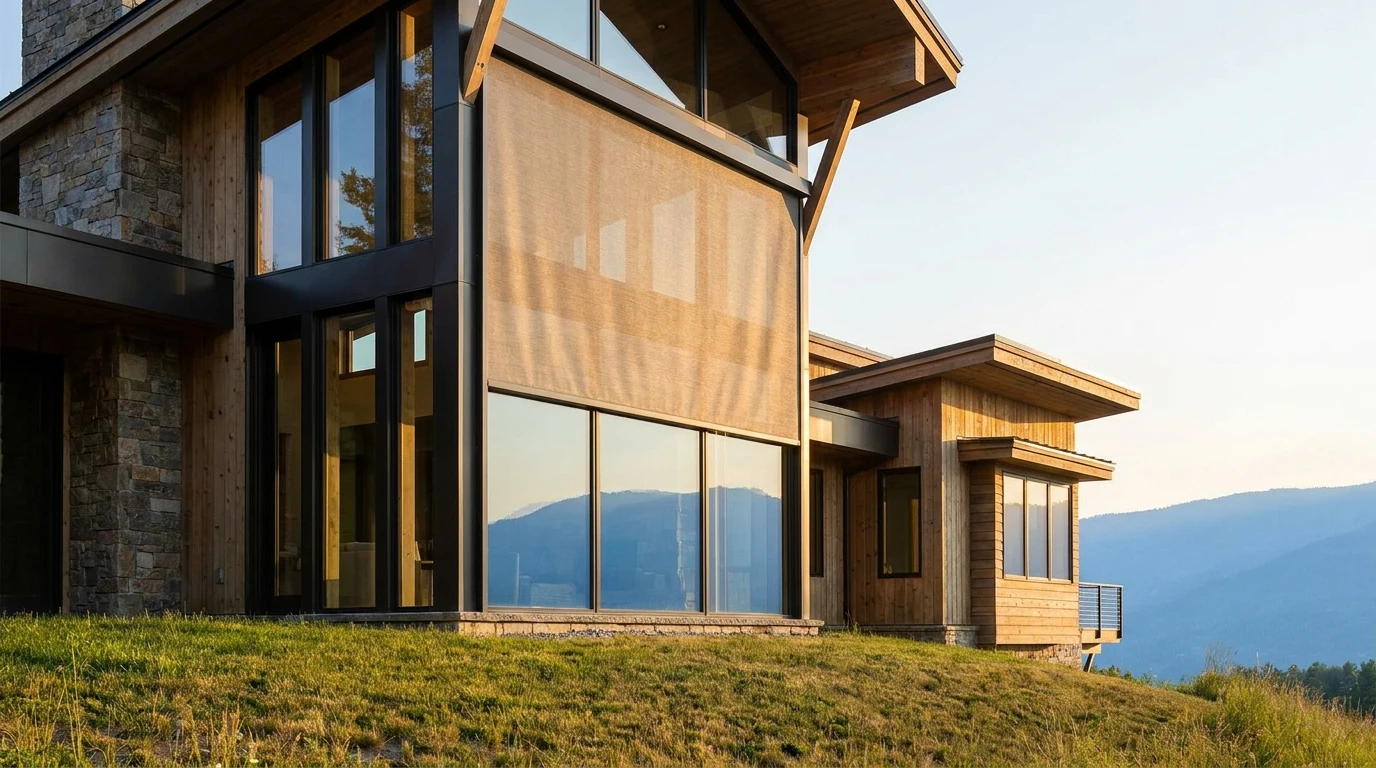
Sandhurst sits on a north-west slope, so the glass built to hold the view is the glass carrying the afternoon. The Papers set out the sun path through the year, walk each elevation in turn, and give the reasoning — and the honest catch — behind every product we would specify here. Every figure is sourced at the foot of the page.
Read the PapersHow it works
Tell us the rooms, the rough window count and when suits you. Two minutes on the form or the chat is enough to start.
A consultant comes to you with the sample folder, measures every opening properly and works through fabric, openness and motorisation room by room.
You get it in writing, itemised per window, with no obligation. Where a cheaper option will do the job, we say so. As a broad guide beforehand, shading in Sandhurst runs from R1,000 to R7,500 per square metre installed, depending on the product and on whether it is hand-operated or motorised. Small windows carry a minimum charge, and the exact figure for each opening comes out of the measure.
Everything is manufactured to your measurements and installed by our own team, who take the packaging away with them.
Where we work
Same consultant-led measure, same made-to-order manufacture, same installation team. However far back the gate is, the measure is still free.
Penthouse and apartment glazing around Hyde Park Corner — wide balcony sliders taking the full afternoon.
Blinds in Hyde Park →Cluster homes and townhouses in the quiet triangle between Sandton and the Wanderers.
Blinds in Atholl →Low-rise apartments and established homes on the Rosebank side, often with older steel-framed openings.
Blinds in Illovo →Architect-led renovations with frameless glass, calling for concealed, recessed detailing.
Blinds in Dunkeld →Equestrian-belt properties with large glazed entertainment wings and long west-facing runs.
Blinds in Inanda →Good to know
Yes, and it is the right time to involve us. Concealed and recessed systems are decided by the ceiling, so we advise on recess dimensions, where motor power needs to land and how the pocket meets the lighting and the aircon — then install once the site is ready.
Yes. Multi-channel remotes, wall keypads and app control group blinds by room, by elevation or by whole house, including schedules and sun-tracking automation. Motors can be mains-wired or rechargeable battery depending on what the building allows.
No — keeping the view is the entire point of the fabric. A 3–5% openness weave cuts glare and UV while you still see through it during the day. It is worth knowing that the same fabric works the other way after dark, when interior lights are on, which is why bedrooms usually get a blockout as well.
Tall openings need a heavier tube, correct fabric weight and almost always a motor — nobody wants to pull a four-metre blind by hand twice a day. Where the elevation takes real sun we would rather put the shading outside the glass, with external venetians or roller shutters, and keep the interior blind for privacy and glare.
No. The roller shutters we fit are shading products: rigid aluminium slats outside the glass that handle sun, heat, glare and daytime privacy. Security-rated shutters are a different product with a different specification, available on request. We will never sell you the one as the other.
Yes — restringing, chains, brackets, tilt mechanisms, re-fitting after a repaint or a move, and motors that have stopped responding, whoever made the blind. A consultant will tell you honestly when a repair is not worth it.
Ready when you are
Send the rooms and a rough window count and one of our expert consultants will contact you shortly to arrange a free in-home measure with samples. No obligation, and no pressure at the door.
Request a measure
Fill in what you know. If you would rather talk it through first, the chat at the bottom of the screen answers product questions any hour of the day.
Would you rather have a ballpark first? Pop rough sizes into the window list in the Papers and we will send a budget range by the next working day. Not sure how to measure? Leave it — our consultant measures for free either way, and that is where the exact per-window pricing comes from.