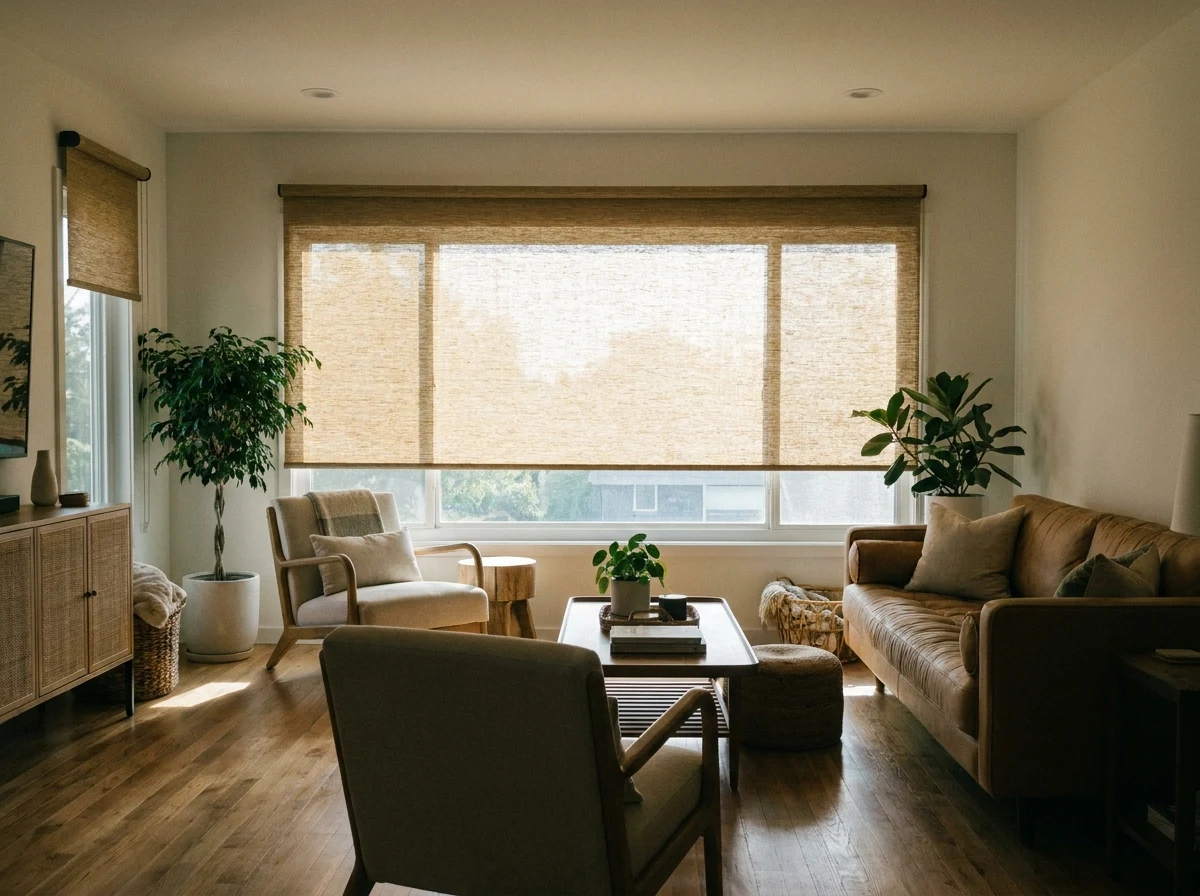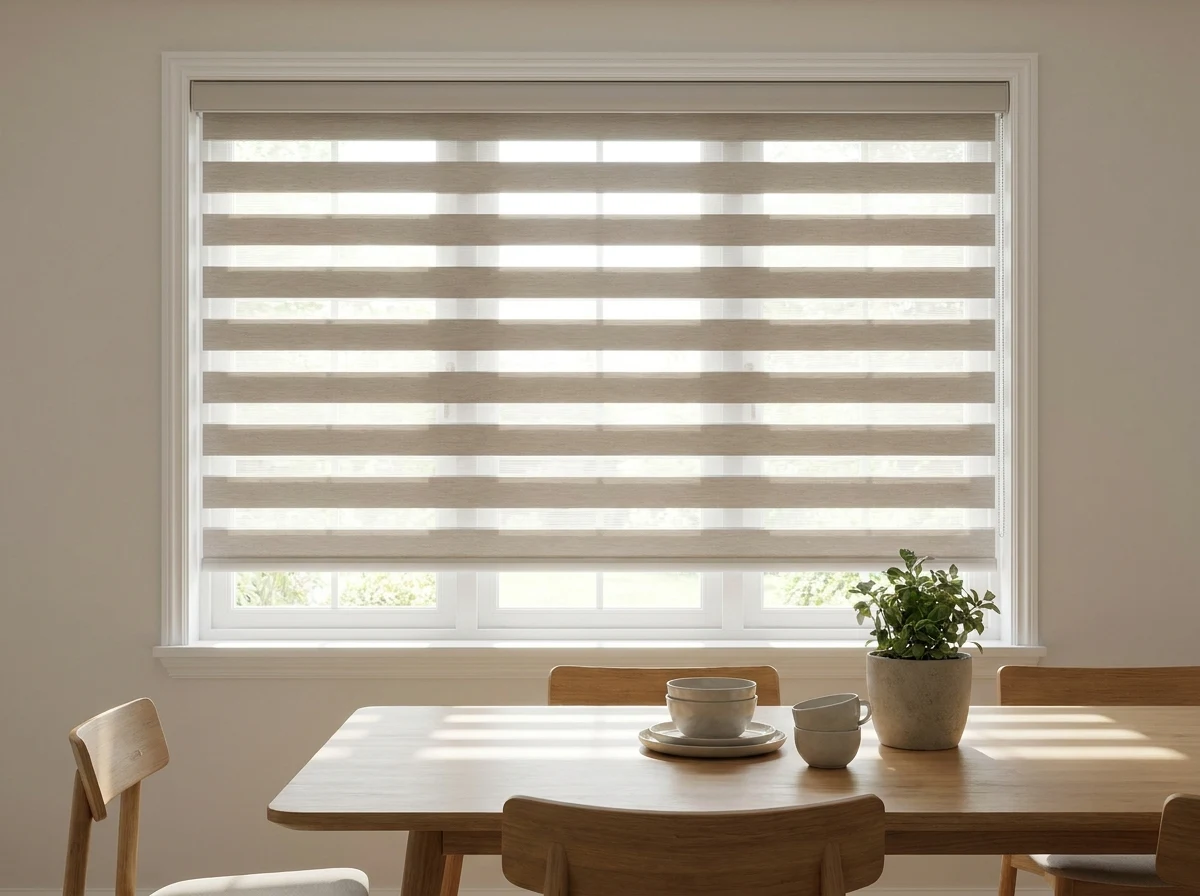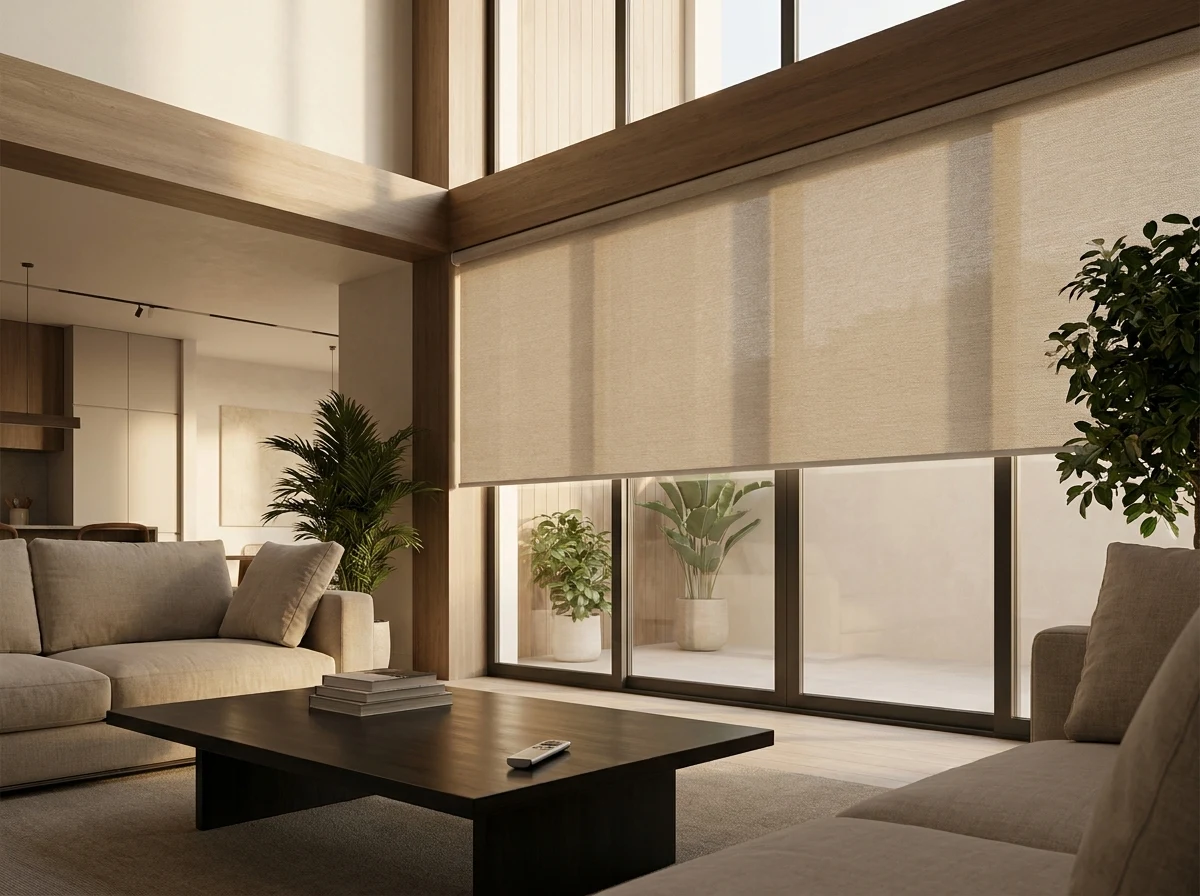
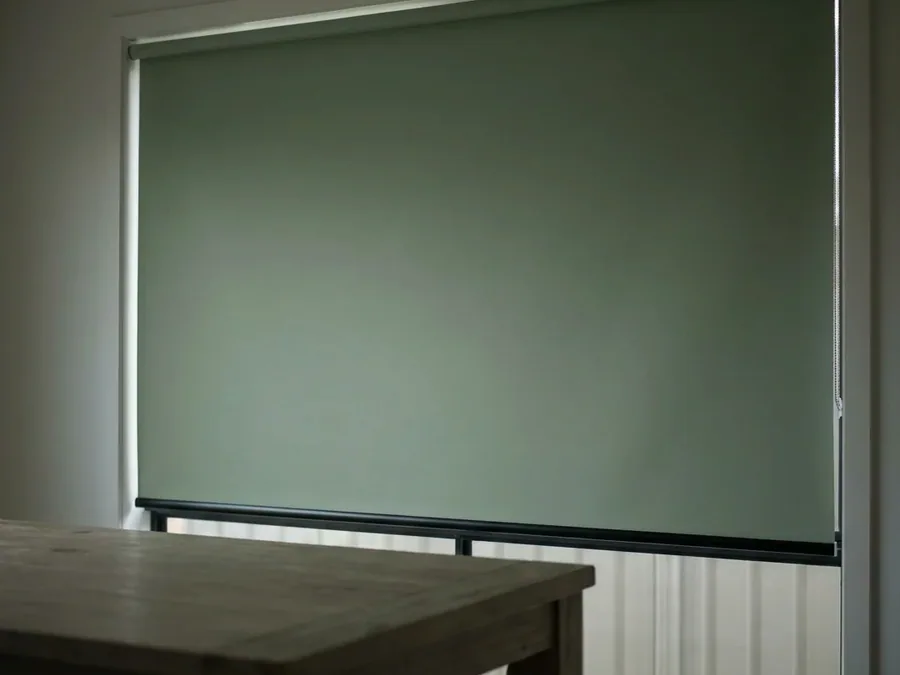
A blockout roller reads as dark only when it is wider than the reveal — the overlap matters more than the fabric.
A roller blind is the simplest thing we make and, done properly, one of the hardest to beat. A single flat sheet of fabric winds onto a tube behind a neat headbox or cassette. There are no folds to gather dust, no slats to dust individually, and nothing to go out of alignment.
Blockout fabric has a coated back that stops light rather than filtering it. In Sandhurst that puts it in bedrooms, guest suites, media rooms and any room where a projector or a late sleeper is involved. The fabric itself is only half the job: light escapes around the edges long before it comes through the cloth, so the honest fix is a generous overlap onto the wall, or side channels where the room needs to be genuinely black.
On tall Sandhurst openings — and there are plenty — we spec a heavier tube so the fabric hangs dead flat, and past roughly 2.4m wide we would normally motorise. A blockout blind at that size is more weight than anyone wants to pull twice a day.
Practical notes
- Coated blockout fabrics in a range of neutral tones; samples brought to the measure.
- Side channels or a deep overlap where the room must be properly dark.
- Double brackets let a blockout and a sunscreen share one window.
- Child-safe chain tensioners as standard; cordless and motorised options for nurseries.
Where we fit this
Blockout rollers go into bedrooms and media rooms right across this side of Johannesburg — from Sandhurst itself into Hyde Park, Atholl, Illovo, Dunkeld and Inanda.
What a blockout roller costs in Sandhurst
As a guide per square metre, installed: a chain or spring blockout roller runs about R1,000 to R1,500 per square metre. Motorised, allow R2,500 to R3,500 for each square metre, covering the drive, the control and the setup on the day.
A bathroom or dressing-room window carries a minimum charge, because the brackets, tube, fabric cut and fitting time do not shrink with the pane. The figure for each of your windows is worked out at the free measure and written down before anything is ordered.
Often specified together